
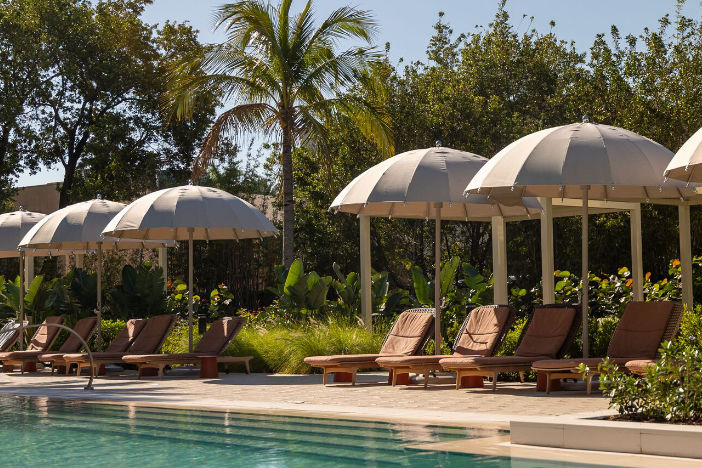
Why shade has to fit the space
Outdoor shade decisions get easier when they start with how a space behaves, not with a product category. A restaurant patio, a resort pool deck, a shared rooftop terrace and a home patio may all use umbrellas, but they do not ask the same thing of them.
That difference is what this series is about. The useful question is not simply whether a center‑pole or cantilever umbrella is “better.” It is what kind of shade behavior each setting needs, who will operate it, and how often anyone will realistically change it once life is happening in the space. If the only way a plan works is “someone keeps fiddling with this all day,” it probably isn’t much of a plan.
Shade matters because it directly shapes comfort and how long people stay outside. Guidance for public and commercial spaces treats shade as part of how a place functions—comfort, safety, and dwell time—rather than as a decorative extra. The same idea applies at home. A space that is technically shaded but awkward to use is like a chair that looks great and somehow never gets sat in.
So instead of starting with “Which umbrella?” it helps to start with “How does this space behave?” Some environments want stable, obvious shade that does its job in one reliable position. Others benefit from rotation, tilt or the ability to reach more than one zone across the day.
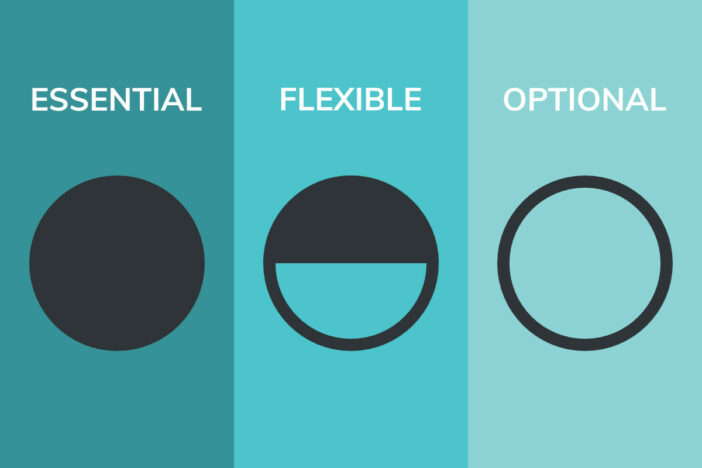
Three kinds of shade needs
A simple framework keeps those decisions clear:
- Essential shade for the places that quickly become uncomfortable without it, like a main dining table or core lounger band.
- Flexible shade for zones that change role through the day, such as a lounge that matters most in late afternoon or a multi‑use patio.
- Optional shade for edges and overflow areas where comfort matters, but the whole layout does not depend on it.
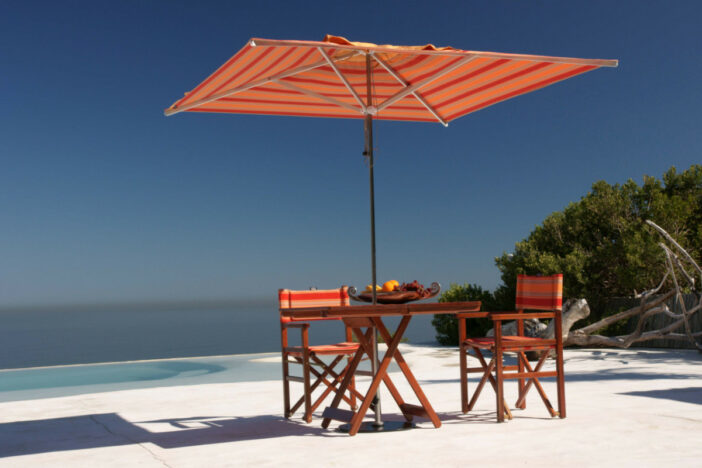
Center‑pole vs cantilever in context
That lens also clarifies why center‑pole and cantilever umbrellas succeed in different roles. Center‑pole umbrellas are often strongest when they create a clear, stable shaded spot with minimal fuss – over a restaurant table, a café setting or a primary dining zone at home. Cantilevers tend to earn their keep when keeping the floor clear matters or when one umbrella genuinely needs to serve more than one cluster of seating on the same surface. In other words, it is less “team center‑pole versus team cantilever” and more “what job are you actually hiring this thing to do?”
Hardware still matters. Canopy size, base location, mechanism type, mounting and fabric all affect comfort, circulation, durability and safety. But those choices make the most sense after the space has been read properly. Otherwise, it is easy to buy features no one will use, or lock in a rigid solution for a site that really does change through the day.
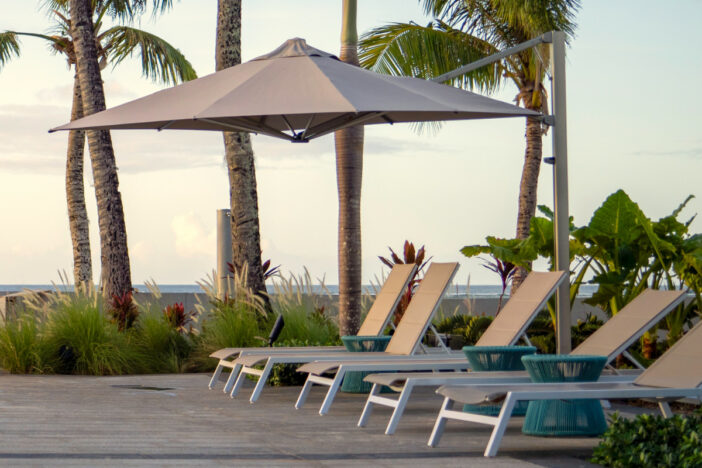
Four scenarios, one planning lens
The four scenario articles that follow use this same lens in more specific ways:
- Restaurants have to protect service flow as much as guest comfort, so shade needs to behave like part of the room rather than a separate system.
- Resort pool decks have guests staying for hours, but staff—not guests—manage the umbrellas, so the deck needs comfortable, orderly coverage more than constant fine‑tuning.
- Shared terraces and courtyards rely on low‑touch shade that works without much explanation or supervision.
- Residential patios are where flexibility is most likely to be used, because the homeowner can move and adjust hardware when it genuinely makes life outside better.
Seen that way, shade planning becomes less about finding a single “best” product and more about matching shade behavior to how each space actually runs. When that match is right, people settle in more naturally, stay longer and spend less time noticing the shade because it is quietly doing what it should. The aim here is not to turn anyone into a shade engineer. It is to make patios, pool decks, terraces and backyards feel more “of course this works” and less “why does this umbrella always seem to be in the wrong place.”









Leave a Reply