
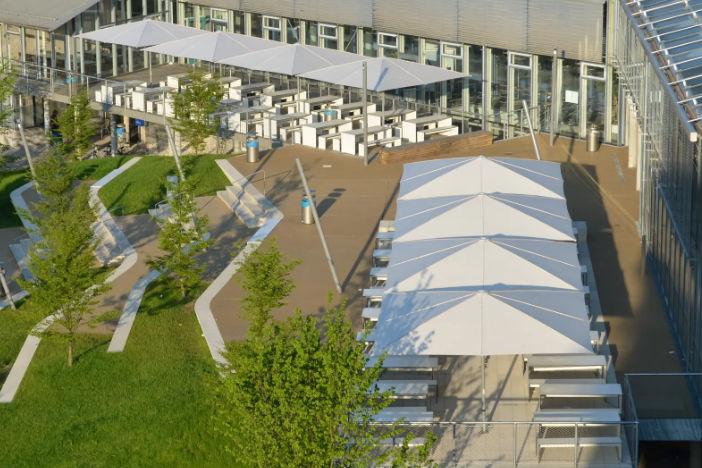
Shared office terraces, rooftop decks and small courtyards sit between hospitality and home. People use them for coffee, quick meals, short calls, a bit of laptop time or a few quiet minutes, usually without anyone actively “running” the space hour by hour. Shade has to support those short visits without turning the area into a system that needs constant supervision. If a terrace only behaves when someone is constantly on shade duty, it’s probably trying to be more important than it needs to be.
Picture an office rooftop mid‑afternoon. A few people are eating lunch near the parapet, someone is on a call at a small table, two colleagues have claimed the bench that stays shaded most of the day. Facilities set the space up, but nobody is out there managing umbrellas during use. In that scene, the good shade decisions are the ones that make the comfortable seats obvious and easy to use without fiddling. Most people are stepping out for ten minutes, not auditioning for a role in facilities.
That is the core difference from restaurants and resorts. In shared spaces, shade mostly has to succeed as placed.
How shared outdoor spaces behave
Rooftop terraces, podium decks, courtyards and small plazas look different, but they tend to behave in similar ways:
- Short dwell times rather than all‑day stays.
- Mixed seating: café tables, benches, built‑ins and occasional lounge chairs.
- Clear through‑routes to doors, stairs and amenities.
- Light‑touch oversight, with facilities making changes occasionally rather than constantly.
Shade has to fit that pattern. Someone stepping outside shouldn’t have to think about whether an umbrella needs to be tilted or rotated first. A seat should either feel comfortable in typical sun or it won’t be used much.
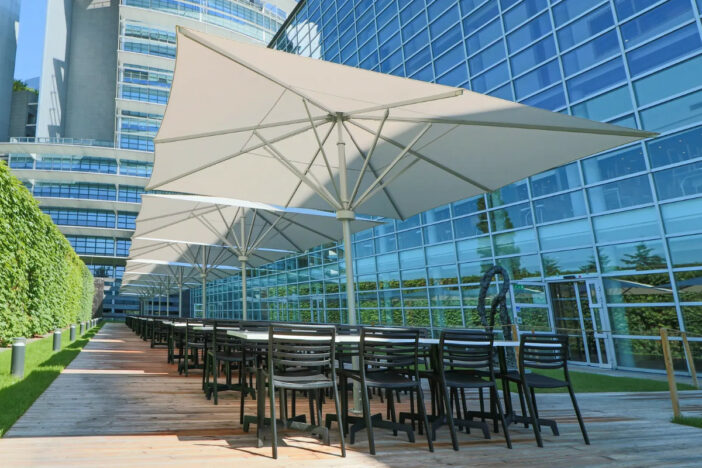
Center‑pole umbrellas for everyday table shade
For many shared terraces, center‑pole umbrellas over tables are still the simplest way to give people reliable shade. They slot into modest layouts, feel familiar and make it obvious which seats are likely to be comfortable.
They work best when:
- Bases stay within the table footprint or off the main circulation routes.
- Canopies are sized to cover actual seating positions, not just the tabletop.
- Poles are placed where they don’t surprise anyone walking through.
In these spaces, clarity beats flexibility. A table with an upright umbrella either looks usable or it doesn’t. People don’t expect to adjust anything beyond pulling a chair in or out, and facilities staff are better served by shade that works most of the time without active management.
Tilt features exist on some commercial center‑poles, but they often cause more layout trouble than comfort gain. Once canopies lean into door arcs or walkways, shade stops feeling helpful and starts feeling like a hazard.
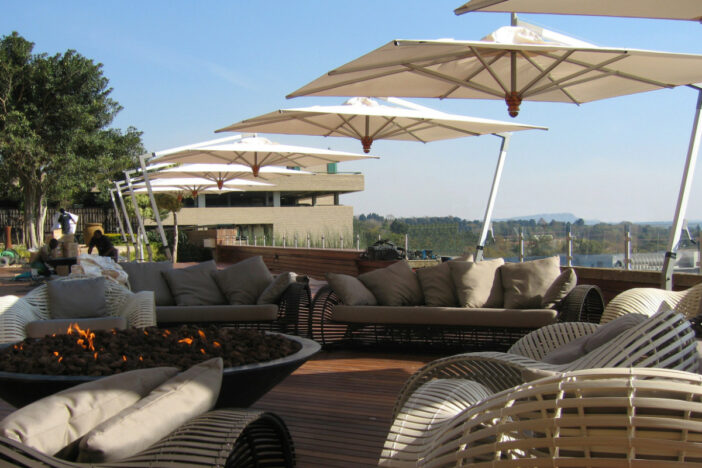
Cantilevers where clear floor space matters
Cantilever umbrellas earn their keep in spots where clear floor space and unobstructed views matter more: parapet‑edge lounges, corner benches, or clusters where a center pole would land right in the middle. Similar clear‑floor shade setups often show up around hotel pools.
In those situations, a cantilever can:
- Sit along an edge or near a planter.
- Reach over a seating pocket while leaving the floor under the canopy mostly open.
- Reduce the number of poles scattered through a tight layout.
On shared terraces, the richer adjustment features of cantilevers—rotation and tilt—are still best treated as low‑touch tools. Facilities can set one or two standard positions that work for most conditions, then adjust only occasionally when the season changes or a particular corner needs a nudge. The design shouldn’t rely on constant re‑aiming.
That’s especially true on exposed rooftops, where wind and sun can be more intense. A beautifully adjustable umbrella that only works when someone is always at the controls is a poor match for a lightly managed space.
Architecture, planting and other shade
Shared outdoor spaces rarely start as blank, evenly sunny rectangles. Courtyards inherit shade and wind patterns from surrounding walls. Rooftops gain shelter or glare from parapets, screens and neighboring structures. Plazas often have trees or planters that already contribute some shade and cooling. Real terraces inherit quirks: bright corners, surprisingly cool edges and that one table everyone fights over once they discover it never bakes.
Umbrellas sit inside that context:
- Architecture may create comfortable edges and brighter pockets.
- Trees and planting soften some seats but leave others exposed.
- Canopies, pergolas or retractable systems might already handle part of the load.
The most effective plans use umbrellas to fix the remaining problems. A café table just outside façade shade, a bench where canopy thinning creates a harsh patch at midday, or a lounge pocket in a high‑glare corner may need one well‑placed umbrella to become genuinely usable. The rest of the space can stay simpler.
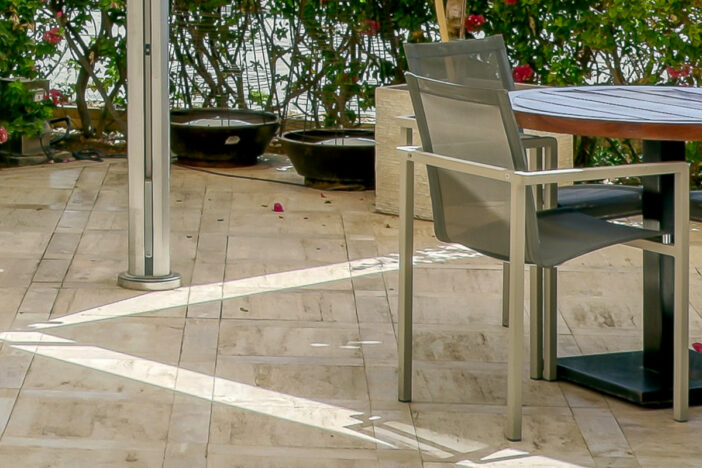
Bases, mounts and rooftop realities
On rooftops, podium decks and tight courtyards, where and how umbrellas meet the ground matters as much as what they look like. These spaces often have less spare room than photos suggest and more technical constraints than a simple patio.
A few realities shape base and mounting choices:
- Bases that seem minor in a backyard can become obvious obstacles in shared circulation.
- Rooftops and podium decks have structural and waterproofing considerations that often favour anchored or more deliberate mounting.
- Courtyards tend to focus movement through a few clear routes, so anything in those paths is noticed quickly.
For those reasons, sleeves, surface plates or heavier, tucked‑away bases often make more sense than casual portability. Movement, when it happens, is usually occasional and planned—handled by facilities between seasons or after a layout change—rather than something everyday users do.
Patterns that work in practice
You can think of shared terraces and courtyards as a few recurring types.
Courtyard between buildings
Courtyards often have built‑in shade from surrounding façades. Umbrellas typically fill brighter openings: center‑poles at café tables, perhaps a few cantilevers over benches or corner pockets. The aim is to bring the whole space into a comfortable range without overwhelming it with hardware.
Exposed rooftop terrace
On exposed rooftops there’s more sun, more glare and usually more wind. Here, fewer but more deliberate umbrella placements often beat many small ones. Center‑poles can anchor tables, while a limited number of robust cantilevers help with lounge pockets where clear floor space matters.
Shared plaza with trees and mixed seating
In plazas with trees, vegetation already contributes shade and cooling, but not evenly. Umbrellas then support seats that tend to overheat: café tables and benches away from canopy or in thinner coverage zones. Trees do the broad work. Umbrellas fix the details.
Across all three, the same idea repeats. The best shared‑space shade plans don’t ask users to understand the hardware. They quietly make the obvious seats feel good most of the time. If someone has to think hard about how to make a corner work, something upstream in the design probably needs adjusting more than the umbrella does.
Shared terraces and courtyards benefit from shade that works with minimal explanation: people take the obvious seats, stay comfortable for a while and head back inside when they’re done. Treating architecture, planting and umbrellas as one system keeps circulation clear and makes it easier to support short, varied uses without constant oversight. If your project also includes restaurant patios, pool decks or home outdoor rooms, the companion articles show how the same behavioral lens shifts as service, staffing and dwell times change.









Leave a Reply