
Outdoor Rugs
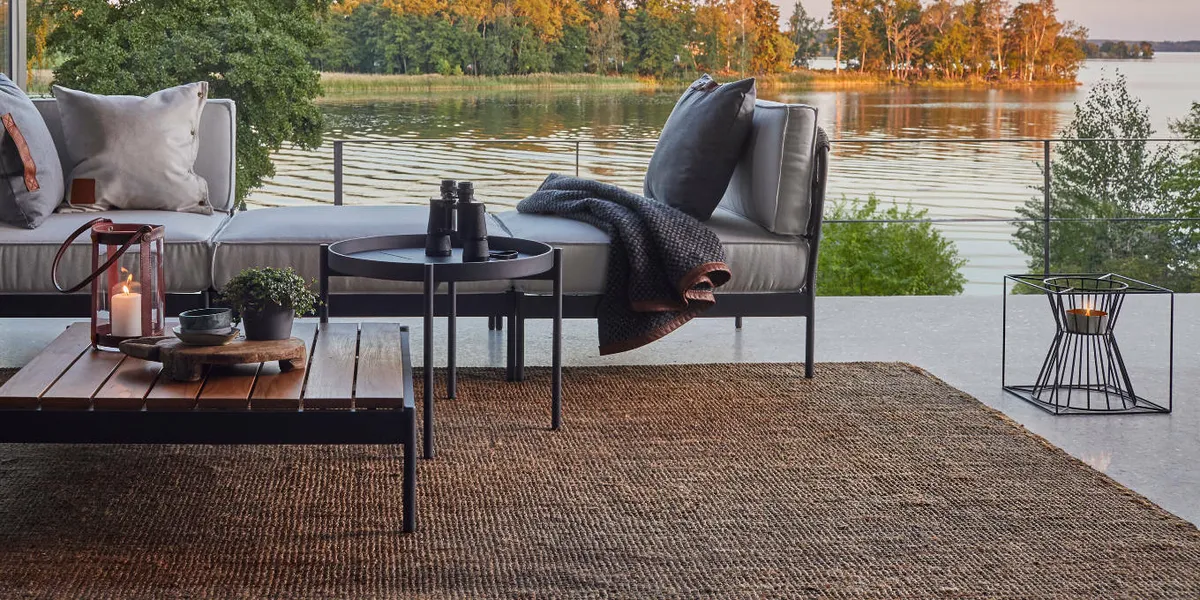

Outdoor rugs that finish the space and help organize it
Outdoor rugs help define dining and lounge areas, soften hard surfaces and make patios, porches and sunrooms feel more settled. They’re designed for spaces that see sun, moisture and regular traffic, but many also work well indoors where durability matters more than plushness.
The main decisions are size, weave and how the rug will live with the furniture around it. A good outdoor rug should support the layout, handle the conditions and feel easy to maintain once real life starts happening on top of it.
Materials, texture and everyday use
Most outdoor rugs use durable, easy-care fibers that dry faster and hold up better outside than typical indoor materials. Flat and lower-profile weaves usually make more sense under dining sets and doorways, while more textured styles can work well in lounge areas where comfort matters more than chair movement.
Color and pattern do some quiet layout work too. A simpler rug can calm busy frames, cushions and finishes, while a bolder pattern can help wake up very neutral furniture without needing to replace anything big.
How to get the size right
Rug size has a bigger effect on the finished layout than pattern or color. Dining rugs need enough room for chairs to stay on the surface when pulled back, while lounge setups usually look best when the seating feels visually tied together rather than scattered around the edge.
If you want help mapping common layouts, our Outdoor Rug Size Guide gets into the specifics without turning this page into homework.
Pro tips: key things to decide before you buy
- Start with the furniture footprint - A rug should relate to the seating or dining group, not just fill an empty rectangle on the patio.
- Use flatter weaves where chairs move often - Dining chairs and frequent traffic usually get along better with lower-profile rugs.
- Match the rug to the exposure - Wetter, messier or more exposed areas usually call for simpler weaves that clean up quickly and dry fast.
- Let pattern support, not fight, the space - Strong patterns are easier to live with when at least one color repeats something already in the furniture or surroundings.
- Be careful with undersizing - A rug that is slightly too large usually looks intentional. One that is too small usually looks accidental.
Frequently Asked Questions – Outdoor rugs
Can outdoor rugs be used indoors?
Yes. Outdoor rugs are often a smart fit for mudrooms, sunrooms, kitchens and other busy spaces where durability and easy cleanup matter more than a soft, plush feel.
Do I need a rug pad under an outdoor rug?
Sometimes. On smoother patios or decks, a suitable pad can help with grip and keep the rug from shifting. It can also help with airflow depending on the surface below.
How do I clean an outdoor rug?
Most outdoor rugs can be maintained with regular shaking, vacuuming or a hose-down, depending on the weave and fiber. Letting the rug dry fully before heavy use helps it stay fresher and age better.
For a broader look at materials, care and common buying mistakes, our Outdoor Rugs Buying Guide is the better place to go deeper.