
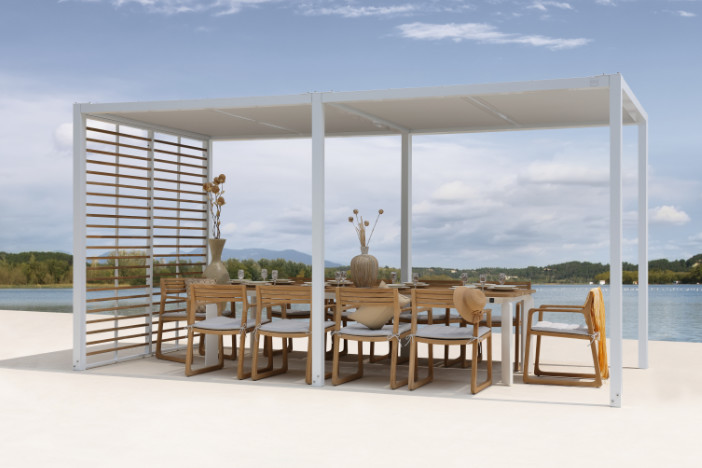
Most shade decisions are made one purchase at a time. A table feels too hot at lunch. A lounge corner gets blasted in late afternoon. The pool deck needs a place to cool off. The result is often more shade, but not always a better plan.
A stronger approach starts with the whole space. Shade should support how people use the area, how they move through it and what they see from each zone. That usually means thinking about market and cantilever umbrellas, along with other shade elements, together instead of treating each one like a separate fix. That same mindset shows up in broader outdoor design guidance too. Better Homes & Gardens makes a similar point in its patio shade ideas roundup, which looks at shade as a mix of solutions rather than a single product choice.
The same questions show up on private homes, multifamily amenity decks, restaurant patios and hospitality terraces. Which zones need dependable shade. Where flexible shade is enough. What should stay open so the layout still feels generous and composed.
This guide focuses on planning and layout. It does not replace product manuals or professional guidance. Follow each manufacturer’s instructions for use, mounting and care. For structural, code or safety decisions, work with qualified professionals.
Start with zones, then assign shade roles
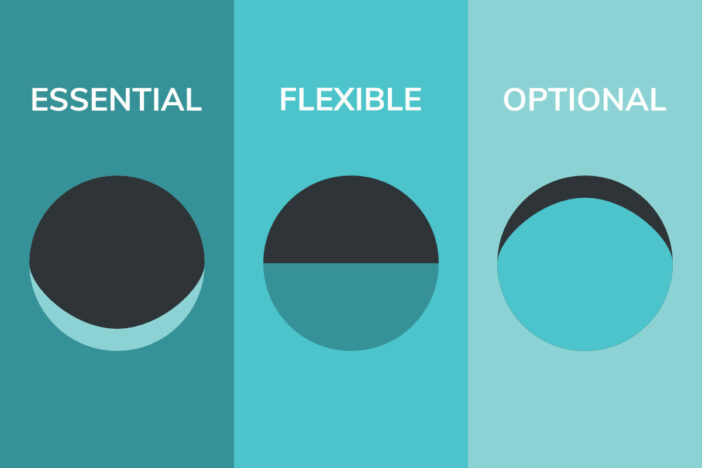
A simple way to plan outdoor shade is to think in terms of priority. Some areas need reliable coverage almost all the time, some benefit from shade that can move or adapt and some can remain more open depending on how the space is used. That is where three shade zone types help: Shade Essential, Shade Flexible and Shade Optional.
Shade Essential zones are the places where comfort, function or material protection depend on dependable coverage. Flexible zones still benefit from coverage, but they can often be handled with movable or adjustable solutions. Optional zones are lower-priority areas where a little sun is acceptable and full-time shade is not always necessary.
If you’re working with motorized or app-controlled shade, these three priorities line up well with the core, support and flex zone ideas in our smart outdoor shade systems guide.
- Essential Shade – dependable coverage for primary gathering areas, high-use seating and places where heat or glare quickly make the space less usable.
- Flexible Shade – adaptable coverage for secondary seating, changing routines and multi-use areas that do not always need the same shade solution.
- Optional Shade – lower-priority coverage for transition areas, edge seating or open patio zones where some direct sun may still be welcome.
With those three shade priorities in mind, it becomes much easier to decide where market umbrellas, cantilevers, pergolas or other shade structures will have the biggest impact. The following patio scenarios show how Shade Essential, Flexible and Optional zones can work in real layouts.
Small balcony or compact terrace
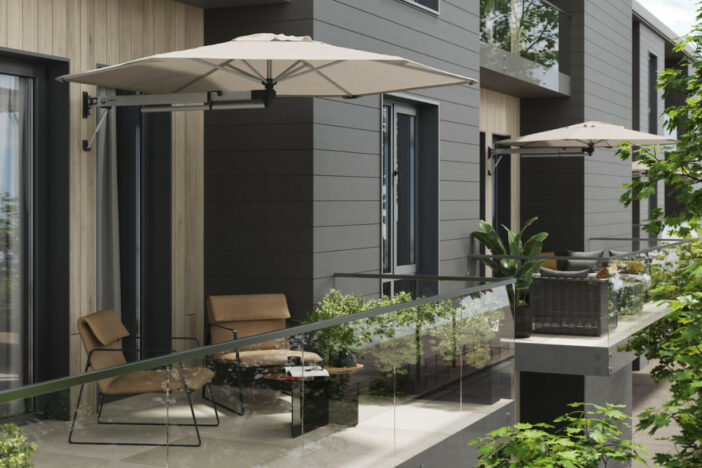
In a small patio or balcony, most of the usable footprint is usually Shade Essential, which is why one well-placed shade element often matters more than several smaller ones.
The first question is simple – what exactly needs shade? In some spaces it is a small dining or bistro table. In others it is a pair of lounge chairs or a compact sofa. Shade should match that job, not just the square footage.
If the main destination is a table with a center hole, a market (center-pole) umbrella is often the cleanest move. If the goal is to shade a small seating group, a compact cantilever or offset umbrella can free up the center of the layout. In especially tight spaces, wall-mounted umbrellas are worth considering too. They can provide targeted shade without giving up precious floor area to a base, which is particularly useful on narrow balconies and compact terraces where every inch starts to matter.
Placement matters as much as type. Keep the umbrella out of the main path between seating and the door. Make sure the pole and canopy do not cut through the best outward view from a seated position. On upper floors and exposed terraces, plan to use umbrellas conservatively and close them when not in use.
- What works – a market umbrella through a bistro table, a compact cantilever or offset umbrella for a small lounge setup, a wall-mounted umbrella when floor space is tight, a rectangular canopy over narrow tables or benches and a canopy shape that follows the furniture footprint.
- What to watch – blocked doors, interrupted views and canopies that visually overwhelm the space.
Entertaining patio – Dining, lounge and outdoor kitchen
Some patios host more than one kind of gathering. They may need shade for everyday dining, relaxed lounge time and, in larger layouts, outdoor cooking or bar service.
Shade for dining and lounge patios
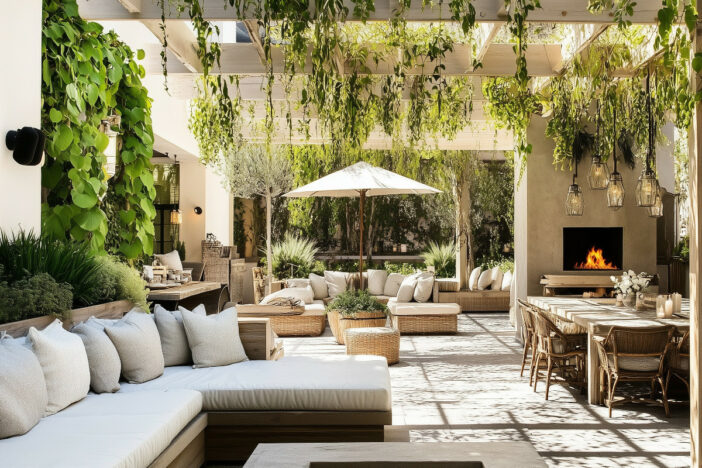
Many patios need shade to do more than one job well. They may combine a dining table, a lounge group and, in larger layouts, an outdoor kitchen or bar, so the challenge is creating comfort without crowding the space with too many poles, bases or overlapping canopies.
Start by identifying the patio’s primary gathering zone. On a more typical dining-and-lounge patio, that is often the dining table, with a secondary shade element covering the lounge so people stay comfortable before and after meals. On an entertaining patio, the dining table is often Shade Essential, while nearby lounge seating may be more Shade Flexible depending on how the space is used day to day. In this version, flexible shade matters most. A cantilever can stretch over a seating group without interrupting circulation, while smaller movable umbrellas can adapt to changing routines and occasional needs.
Shade for patios with outdoor kitchens
On a larger entertaining patio with an outdoor kitchen or bar, the same zoning logic applies, but the emphasis shifts. Here, structural shade usually plays a bigger role over the main dining or service area, while umbrellas and cantilevers support adjacent lounge seating, high-top tables or smaller conversation pockets.
In either version, the best layouts treat shade as part of the patio plan rather than an accessory added at the end. Leave open paths between zones, avoid blocking key views and use fewer, better-placed shade elements so the patio feels intentional instead of crowded. Readers who want a broader overview of umbrella types, sizing and placement can use the patio umbrella buying guide for more detail.
- What works – One main shade move for the primary gathering zone, then a secondary layer for the lounge or overflow seating; broad coverage that does not interrupt the furniture arrangement; flexible shade that can adapt to changing routines; clear movement between cooking, serving, dining and relaxing.
- What to watch – Too many bases and poles competing with chairs, stools and traffic paths; using the same shade solution for every zone even when the patio has different activities and scales; shade placed too close to grilling or service areas; trying to cover every inch evenly instead of prioritizing the places people actually gather.
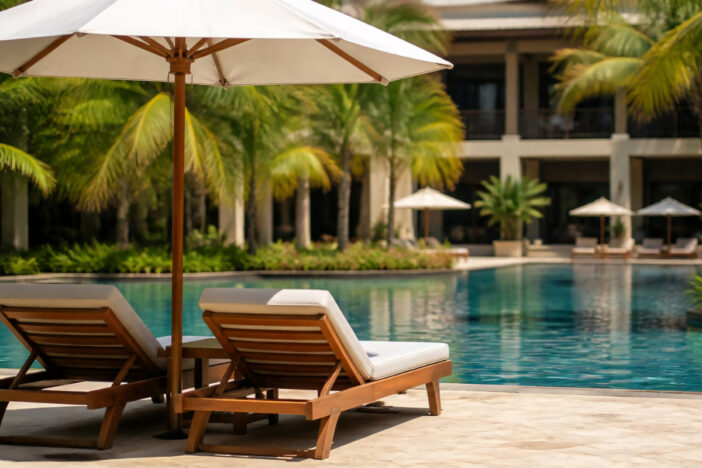
Poolside chaise and lounge area
Pool areas need a different balance. Most people do not want uniform cover from edge to edge. They want a mix of sun and relief. The deck should still feel bright and open, but there should be dependable Shade Essential coverage where people actually pause and Shade Optional space where sun is part of the experience.
A simple, effective pattern is one market umbrella for every two chaises. It is easy to understand and easy to use. A rotating cantilever or offset umbrella can also work well when several chairs share a small seating island, or when a low lounge group sits at the pool edge and needs coverage that shifts through the day.
On larger decks, a multi-canopy cantilever umbrella can shade multiple chaise pairs or a mix of chaises and low seating from one base. That can be useful when deck space is valuable and when keeping circulation clear matters as much as coverage. Because splash, reflected light and chemicals add wear, poolside projects also benefit from a realistic maintenance plan, so it makes sense to keep umbrella cleaning and care in mind from the start.
- What works – one market umbrella per two chaises, a rotating cantilever or offset umbrella for a cluster of loungers, rectangular canopies that track chaise pairs or long seating runs and multi-canopy systems for shared shade across adjacent seating groups.
- What to watch – bases that tighten pool circulation, too much coverage and maintenance demands in splash-heavy environments.
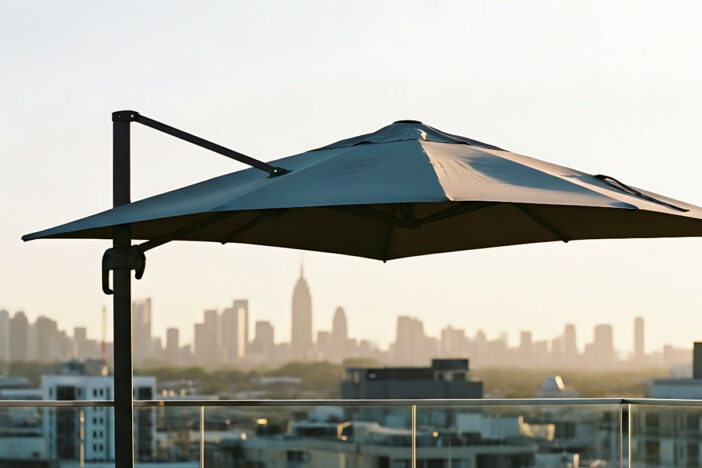
Urban rooftop deck
Rooftop decks add a few more variables. They usually offer strong views and sun, but also more constraints. There may be parapets, railings, planters, mechanical areas and stricter rules around structure or mounting, and even zones that might otherwise be Shade Flexible can start to behave more like Shade Essential areas because sun and wind are less forgiving.
Market and cantilever umbrellas usually work best on rooftops when they are assigned to specific seating pockets. They can be excellent over a lounge group, a dining table or a small gathering zone. They are less effective when expected to solve every exposure issue across the deck, especially when Shade Essential and Shade Flexible areas are not clearly distinguished.
Because rooftop space is valuable, rotating cantilever or offset umbrellas and multi-canopy systems can be useful here too. A single base can sometimes serve a lounge area and a secondary seating group, especially when furniture is organized around that pivot point. For projects where mounting details become part of the conversation, our bases and mounts guide is the most natural follow-up.
- What works – targeted coverage over specific zones, shared reach from one well-placed base and more permanent shade near built-in elements.
- What to watch – treating a rooftop like a sheltered patio and making mounting assumptions too early.
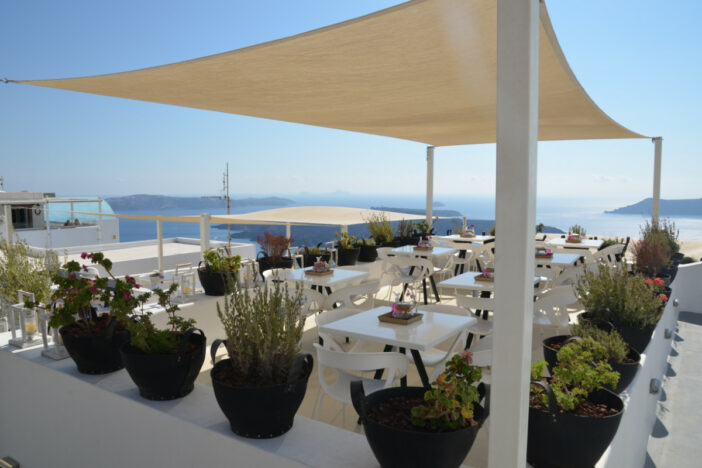
Coastal or highly exposed setting
Exposure changes how shade should be planned, even when the furniture layout looks familiar. Waterfront decks, blufftop terraces and other open sites usually see stronger wind and harder light than sheltered yards or courtyards, so zones that might otherwise be Shade Flexible can start to behave more like Shade Essential areas.
In these projects it helps to treat exposure as a planning issue first. The question is not only which umbrella or cantilever to pick. It is how much of the overall shade strategy should rely on movable Shade Flexible coverage and how much should lean on more permanent Shade Essential systems.
Market and cantilever umbrellas can still be part of the mix. They tend to work best as flexible, fair-weather shade in more protected spots. A mixed approach is usually stronger here. Use movable shade where adaptability matters most and let more robust systems handle zones that demand steadier coverage. In some projects, that may include pergolas, motorized systems or well-planned shade sails. When wind and operation start shaping the product conversation, this wind rating and ease-of-use guide is the right place to go deeper.
- What works – protected pockets, mixed shade strategies and conservative operation.
- What to watch – relying on one shade type for the whole site and assuming performance beyond what manufacturers actually state.
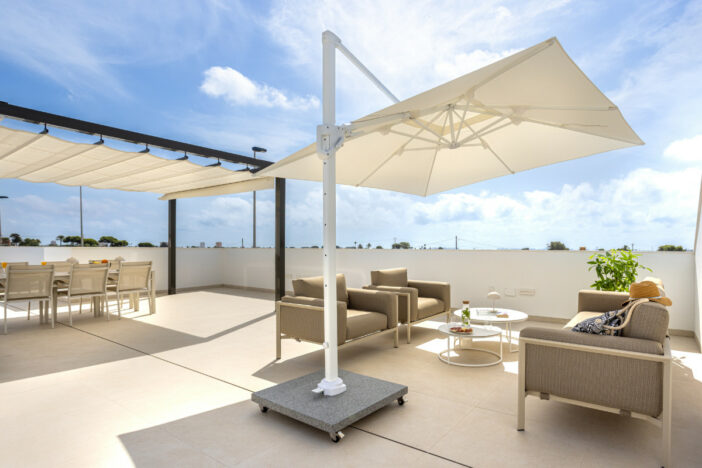
A quick whole-space checklist
- Zones – What are the main zones and when are they really used?
- Shade roles – Which zones are Shade Essential, which are Shade Flexible and which can stay Shade Optional?
- Movement – Where do people naturally walk, gather and look?
- Movable shade – Which parts of the plan are best handled by umbrellas, rotating cantilevers or multi-canopy systems?
- Permanent shade – Which parts call for more structural, sail or smart shade?
- Composition – Does the space still feel composed when canopies are closed?









Leave a Reply