
Outdoor Dining Tables
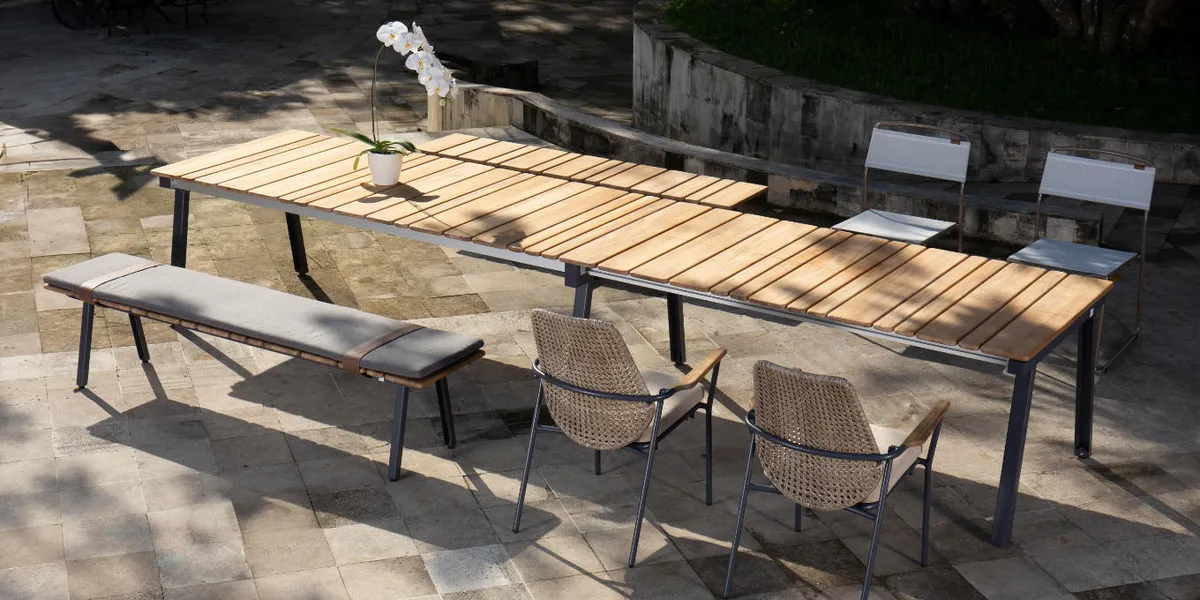


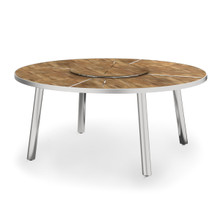

Outdoor dining tables that set the tone for every meal
An outdoor dining table does more than hold plates and glasses. It organizes the whole space, anchors the chairs around it and quietly decides how many people can sit, how easy it is to move and how relaxed the meal feels once everyone is seated.
At this level, the big decisions are practical ones. Size, shape, leg design, extension options and whether the table works with an umbrella all change the way it behaves on a terrace, pool deck or rooftop.
Key choices when you’re picking a table
Shape and size come first. Round and square designs tend to suit smaller spaces and more casual layouts. Rectangular and oval tables usually work better on longer patios and in more formal settings. As a rough guide, plan on about 22–24 inches of table edge per chair, and leave enough room around the table so people can push their chairs back and still walk behind them.
Extensions are the next big decision. Fixed tables keep things visually clean and are ideal when the seat count is consistent. Extendable options add flexibility for bigger gatherings. They need more clearance when open, so it’s worth thinking through both everyday and “all leaves in” layouts before you commit, including where the extra chairs will live when they are not in use.
How bases, tops and umbrellas change the experience
The base has more influence than most people expect. Pedestal and T-shaped structures can free up legroom and make it easier to slide chairs in from any side. Four-corner legs feel familiar and stable but usually ask for a little more planning, especially at the corners where knees and table legs like to compete.
Tabletop material affects both look and upkeep. Slatted teak feels warm and forgiving, ceramic and stone-look tops are crisp and highly practical, and glass can lighten a heavier frame. Many designs are also drilled for umbrellas. If shade is part of the plan, it’s worth confirming pole diameter and base clearance so the whole setup works together.
Pro tips – choosing a dining table that actually fits
- Measure for chairs in use, not just the footprint – It’s easy to size for the top and forget the chairs pulled back. Extra circulation space makes the whole area feel more generous.
- Decide your “real” seat count – Start with how many people you host most often, then let extensions handle the rare big gathering. Oversizing for the exception can make daily use feel less intimate.
- Plan for spare chairs – If you choose an extension table, think about where the extra seats will come from and how they store. Stackable, folding or dual-purpose chairs that live in another zone often make the transition much easier.
- Match the base to your chairs – Armchairs and wider seats do better with structures that leave clean legroom. If you love a sculptural base, make sure it works with how you actually sit and move.
- Think about umbrellas early – A center umbrella hole is convenient, but only if the base and pole diameter work with the table and the way chairs are arranged. Side-post umbrellas can be better when you want a clear tabletop.
- Be honest about maintenance – Teak, ceramic, metal and glass all behave differently in sun and weather. If you’d like a deeper dive into materials and finishes, our guide to choosing an outdoor dining table walks through the tradeoffs in more detail.
Frequently Asked Questions – Dining tables
Is a round or rectangular table better outdoors?
Neither is better in every space. Round tables are strong for conversation and smaller patios where you want softer edges and easier circulation. Rectangular tables tend to work best on longer terraces and in more formal layouts where you often seat six or more.
Oval tables can be a helpful middle ground when you like the flow of a round table but need more linear seating along a narrow space.
Do I need an extendable dining table?
Extendable tables make sense when you occasionally host larger groups but don’t want a very long table in daily life. They let you keep a comfortable everyday footprint and expand only when needed.
If most meals are already at full capacity, a fixed table sized for your usual seat count can be simpler and calmer. In either case, it helps to plan where extra chairs will be stored and how easily they move into place.
What size table do I need for six or eight people?
As a rough guide, a 72 inch rectangular table usually seats six comfortably, while a 96 inch table can often handle eight without feeling crowded. For round tables, 48 inches works well for four and many 60 inch designs can seat six if the chairs aren’t overly wide.
These are starting points. Chair width, arms and how much elbow room you want will nudge the final seat count slightly up or down.