
Outdoor Ottomans
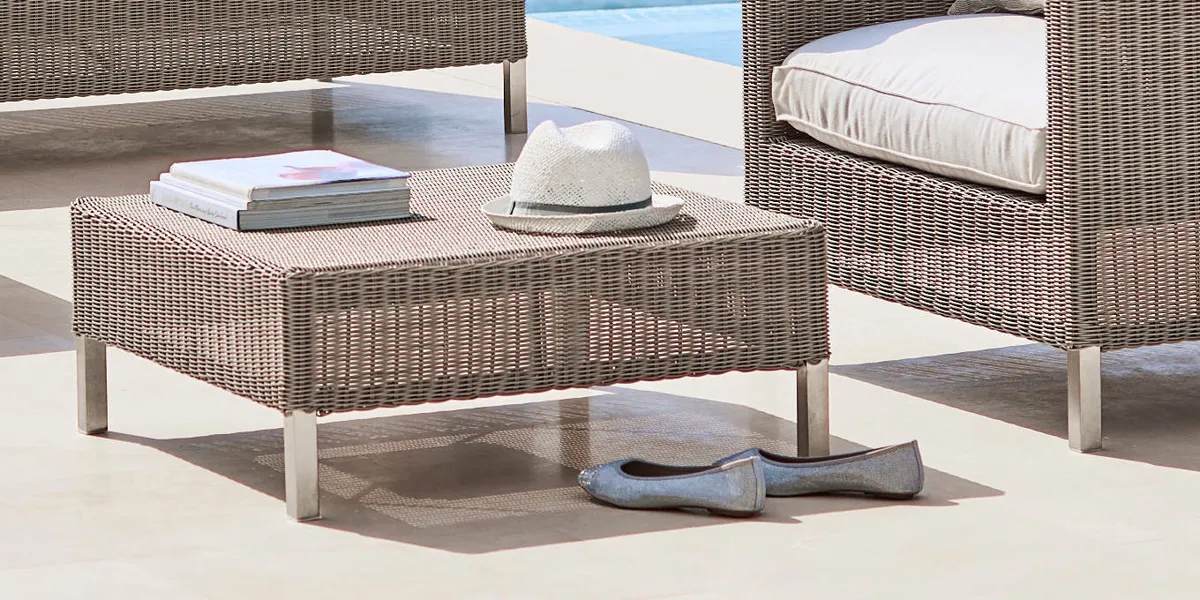


Outdoor ottomans that actually earn their spot
Ottomans are the small pieces that make an outdoor lounge easier to live with. They slide in as footrests, extra seats or quick landing spots for a tray when the main tables are full.
Because they’re light and compact, you can move them as the group shifts, or tuck them out of the way when you want more open space.
Footrests, extra seats and poufs
Structured ottomans usually share frames and cushions with the lounge collections they belong to, so they sit neatly in front of matching sofas and chairs and double as stable extra seating when needed.
Poufs sit at the more relaxed end of the spectrum. They’re often all cushion, easy to move and the first thing kids or extra guests grab when the main seats are taken.
Shapes and how they behave in a layout
Round ottomans soften straight-lined furniture and slide easily between pieces. Squares and rectangles echo modular seating and can extend a chaise or sectional when you line them up with the frame.
Some styles are firm enough to hold a tray for drinks or snacks, while others are better kept as feet-up or sit-down pieces only. Thinking about that up front helps avoid disappointment later.
Pro tips – getting real use out of outdoor ottomans
- Start with the “main” seat – Place the first ottoman where people naturally sit most often, then only add more if there’s a clear job for them.
- Mix one structured piece with one pouf – A matching ottoman keeps a lounge looking tailored, while a pouf can float between groups when you need a flexible perch.
- Match height to how you’ll use it – If it’s mostly a footrest, aim close to seat height. If you want it to carry a tray sometimes, slightly lower and firmer tops work better.
- Leave walking space – Make sure you can still move easily between chairs and tables with ottomans in play. If people keep nudging them out of the way, there are probably too many.
Frequently Asked Questions – Outdoor ottomans
How many ottomans should I plan for in one seating area?
In most lounge setups, one or two ottomans are enough. That gives you flexibility without turning the space into a maze of small pieces.
On larger terraces or pool decks, it often works better to anchor a few key seats with ottomans and leave the rest of the layout more open.
What’s the difference between an ottoman and an outdoor pouf?
Ottomans are usually more structured and often match a specific collection, so they work well as footrests and extra seats that stay put.
Poufs are softer, more casual and meant to move around. They’re better when you want flexible seating that can shift between groups or tuck away easily.
Can an outdoor ottoman really replace a side table?
For casual use, yes. A firmer ottoman can hold a tray with a few drinks or a book, especially if it’s designed with that in mind.
For more regular dining or lots of glassware, pairing ottomans with a dedicated coffee or side table keeps things steadier and more comfortable.