
Outdoor Chaise Lounges & Sunloungers
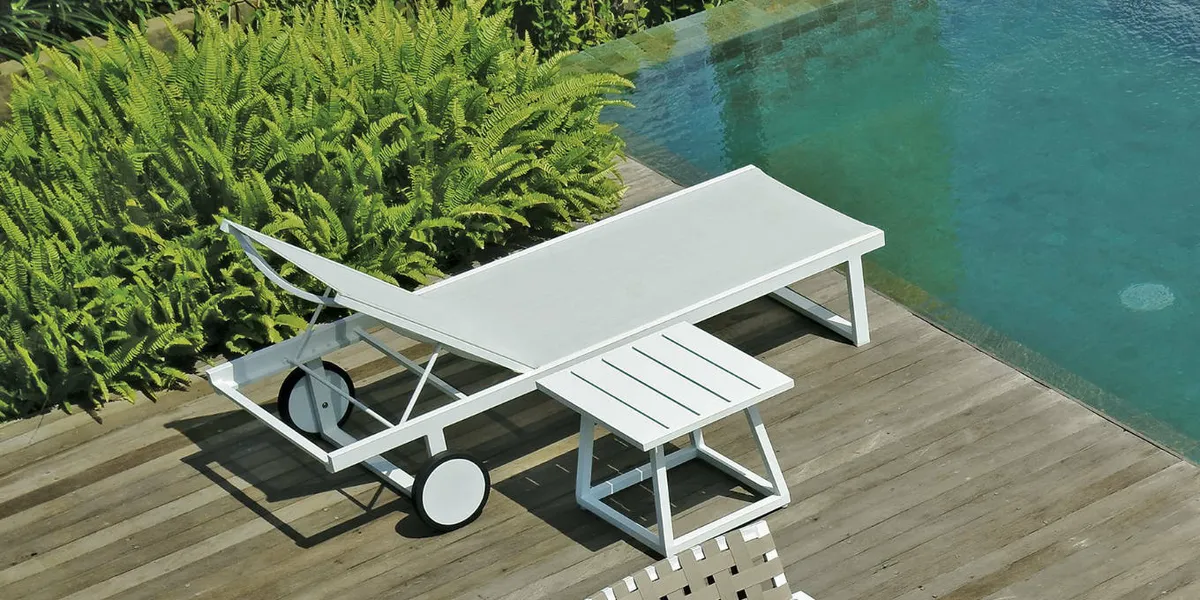



Outdoor sunloungers for real downtime
Sunloungers are where people fully stretch out instead of just sitting back. They’re the pieces you claim after a swim, for an afternoon nap or when you want to follow the sun with a book and a drink by your side.
They sit lower and longer than most lounge seating, so they ask for a bit more space. In return, they make a deck, pool edge or terrace feel more like a resort than a standard seating area.
What actually changes from one sunlounger to another
Most of the experience comes down to backrest adjustment, width and whether the piece is built for one person or two. Multi-position backs let you sit upright to read, recline to talk or lie flat to sunbathe. Fixed-back designs trade flexibility for a cleaner look and fewer moving parts.
Standard single loungers line up neatly in pairs or rows, often with side tables and umbrellas in between. Wider models and double sunbeds feel more indulgent but quickly add to the footprint. If you’re weighing different formats or layouts, our guide to choosing an outdoor chaise lounge walks through dimensions, clearances and common configurations in more detail.
Materials, cushions and water
Poolside pieces live with splashes, sunscreen and strong sun, so frames and surfaces need to handle more than a dry patio sees. Powder-coated aluminum, high-grade steel and teak all cope well with moisture and repeated use when cared for properly.
The surface you lie on matters just as much. Sling and mesh seating drains quickly and is usually ready again soon after a swim. Cushioned sunloungers feel softer and hold warmth but benefit from quick-dry inners and performance fabrics so they don’t stay wet or develop mildew. In full sun, lighter fabric colors and breathable materials are easier to live with over long, hot afternoons. In-pool ledge loungers are a separate niche entirely, designed to sit partially submerged with no cushions at all and different requirements than dry-deck loungers.
Wheels, stacking and storage
Portability matters once you have more than one lounger. Wheels make it easier to slide pieces in and out of sun or to reset the deck at the end of the day. Stackable or folding frames help when you store loungers off-season or keep extras on hand for bigger gatherings.
Heavier, non-stacking designs suit spaces where the layout rarely changes and the visual goal is a stable, architectural line along the deck or pool.
Pro tips – choosing sunloungers that fit your space
- Measure for the frame, not the position – A sunlounger uses the same length whether the back is up or down. Measure the full frame plus walking room around it and along any pool edge.
- Decide how many loungers really earn their keep – Buy for the number of people who regularly stretch out. Occasional guests can use nearby lounge chairs instead of forcing in a second or third row.
- Match the surface to how wet the area is – Sling and mesh are ideal close to the water, where people are in and out of the pool. Cushioned pieces work better in slightly drier lounge zones where you’re staying put longer.
- Plan for movement and storage up front – If you re-park loungers often or clear the deck seasonally, wheels and stackability are worth prioritizing. For a permanent lineup, weight and stability matter more than portability.
Frequently Asked Questions – Outdoor sunloungers
How much space do I need for each sunlounger?
Many sunloungers are roughly the size of a narrow twin bed. Leaving a couple of feet on each side, and a wider path along any pool edge or main walkway, keeps the area comfortable to move through.
If you’re planning a row, measure the total run including side tables and umbrella bases. It’s much easier to adjust on paper than after the deck is full.
Do I really need cushions, or is a sling lounger enough?
Sling and mesh loungers are strong choices right by the pool and in hotter climates. They drain and dry quickly and don’t trap as much heat.
Cushioned models feel more like indoor daybeds and suit longer, slower use a step back from the water. Many spaces use both, so people can choose based on how long they plan to stay put.
Are wheels and stackability worth it for poolside loungers?
They often are when you have several pieces or a layout that shifts between everyday use and larger events. Wheels make it easier to track the sun and tidy the deck at the end of the day.
Stackable frames help with seasonal storage and let you keep extra loungers on hand without crowding the pool when they’re not needed.