
Outdoor Bar & Bistro Tables
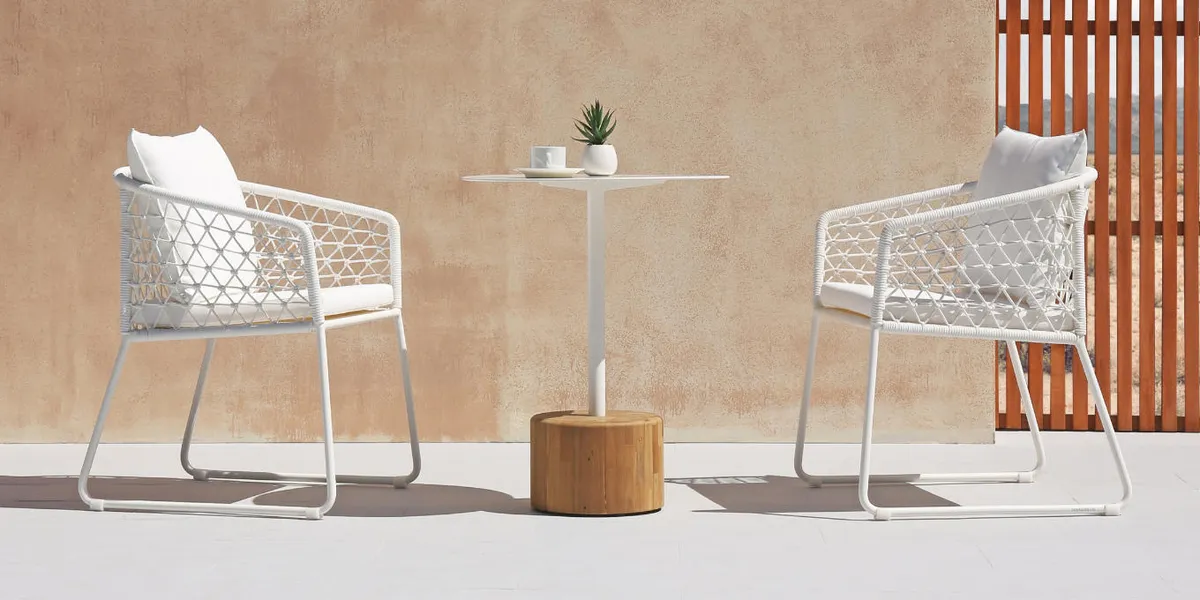
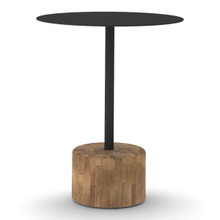


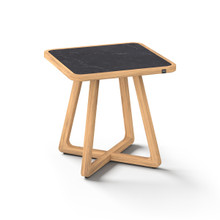

Bistro and bar tables for small, social spaces
Compact tables earn their keep on balconies, small decks and garden corners. They give you a defined spot for coffee, a glass of wine or a laptop without asking for a full dining setup.
Depending on height, they can behave more like a petite café table or a mini standing bar. Add a couple of chairs or a few stools and you’ve got a simple place to land that doesn’t crowd the rest of the furniture.
How bistro and bar tables differ
Bistro tables sit at or near standard dining height and usually serve one or two people. They’re better when you want to sit properly with plates and cutlery, even in a very small footprint.
Bar and counter-height tables sit taller and pair with stools. They’re more casual, work well for drinks and small plates and make sense along railings, outdoor kitchens or bar counters. If you’re thinking about a more dedicated bar zone, our outdoor bar ideas show different ways to build around a high table or ledge.
Shape, footprint and storage
Shape drives how a table sits in the space. Round tops soften corners and are easy to slide around on a balcony or terrace. Square and small rectangular tables line up neatly with walls and railings and can make narrow spaces feel tidier.
Storage and weight decide how fixed the layout feels. Folding designs and lighter pieces are easier to move between zones or bring inside. Heavier, more permanent tables suit layouts that don’t change much from day to day.
Pro tips – choosing a small table that really fits
- Measure the space in motion – Check door swings, how far chairs or stools pull back and where people actually walk. A table that fits on paper can still crowd the circulation path.
- Plan for your “most common” use – If it’s mainly coffee for one or two, a small bistro table is ideal. If the space often turns into a drinks zone, a bar-height top with stools can feel more natural.
- Decide if the table needs to move – Choose folding or lighter designs if you’ll reconfigure the area often or store pieces off-season. Go heavier when the layout is more or less permanent.
- Let it complement, not compete – On patios with a full dining set, use smaller tables as satellites. Matching or echoing finishes will tie everything together without feeling repetitive.
Frequently Asked Questions – Bistro and bar tables
What size bistro table works for two people?
Many two-person bistro tables fall between 24 and 30 inches across. That’s usually enough space for two place settings and a small tray without dominating a balcony or porch.
If you like to share platters, a slightly larger top can help, as long as there’s still room to pull chairs back and move around the table.
How do I choose between a bistro height and bar height table?
Bistro tables suit longer, sit-down moments and work with standard dining chairs. Bar height feels more casual and social and pairs with stools or standing guests.
It often comes down to whether the space behaves more like a mini dining area or an extension of the bar and lounge zones.
Is a folding table better for small balconies?
Folding tables are useful when you sometimes need all the floor space clear, or when storage is tight and you’d like to bring pieces inside off-season.
If the balcony layout rarely changes and the table is used often, a fixed, slightly heavier design can feel more stable and finished.
Do bistro and bar tables need umbrella holes?
Small tables don’t always need their own umbrella if there’s an awning, pergola or natural shade. On exposed sidewalks, balconies and courtyards, a center-pole market umbrella can make the table much more usable in strong sun.
Just keep scale in mind. A compact canopy that’s sized to the tabletop and a weighted base that tucks in close will usually feel better than a large umbrella that overpowers a small setting.