
Powder-Coated Aluminum Patio Furniture
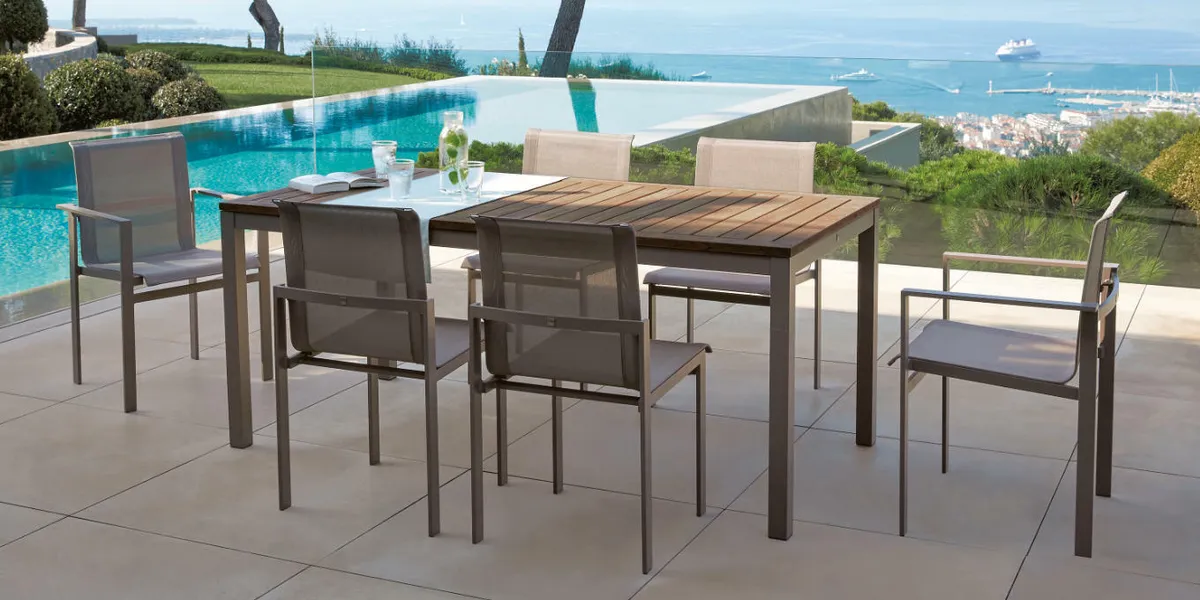



Aluminum patio furniture for lighter, lower-maintenance outdoor spaces
These aluminum collections are favorites for good reason. They’re clean-lined, weather-friendly and much easier to move than heavier metal options, which makes them a natural fit for terraces, pool decks, rooftops and spaces that need to flex without feeling casual.
For luxury residential and hospitality projects, aluminum works best when the brief calls for modern silhouettes, simpler upkeep and frames that don’t fight every layout change. It does heat up in the sun, as metal tends to, so comfort usually comes down to smart sling seating, good cushions or a bit of shade at the right hour.
Why aluminum works so well outdoors
Aluminum stands out for its balance of strength, low weight and resistance to the kind of wear outdoor furniture sees every day. It won’t rust the way iron-based metals can, it handles moisture well and it’s far easier to reposition than steel when a space needs to shift between lounging, dining and entertaining.
That combination makes it especially useful in climates with humidity, rain or frequent seasonal use, and in layouts where furniture gets rearranged more often than anyone admits in the original plan. If you’re comparing aluminum to steel and other metal frame options, our outdoor furniture materials guide for metal frames and tabletops gives a broader view of how each one performs.
How aluminum changes the feel and look
Aluminum tends to create a lighter visual footprint than teak or steel. That can be a real advantage on smaller patios, contemporary rooftops and poolside layouts where you want definition without bulk, and it pairs easily with teak accents, sling seating, woven details or upholstered cushions that soften the frame.
The way the frames are built also changes the feel. Extruded aluminum is common in streamlined contemporary collections because it creates crisp, linear profiles with a strong strength-to-weight ratio. Cast pieces usually feel more decorative and substantial, while wrought or forged aluminum often shows up in more structural silhouettes. Slimmer profiles usually lean modern and portable; heavier cast forms bring more visual weight and a more traditional character.
Finishes matter more than people think
With aluminum, the finish does a lot of the visual and practical work. Powder-coated frames are especially popular because they open up a wide range of colors and textures while adding another layer of protection against moisture, wear and sun. Anodized aluminum keeps a cleaner metallic look and often suits more minimal or architectural settings.
If you’re weighing powder-coated versus anodized surfaces, or just want a clearer sense of what different metal treatments actually do over time, our guide to outdoor furniture finishes and metal treatments breaks down the tradeoffs without turning this page into a finishes manual.
Pro tips – choosing aluminum for the way you actually use the space
- Let weight work for you – Aluminum is easy to move, which is a plus for flexible layouts, seasonal changes and multipurpose terraces. In very windy settings, though, you’ll want enough substance or a layout plan that keeps lighter pieces from wandering off on their own little adventure.
- Don’t treat every finish as equal – Powder-coated aluminum usually gives you the broadest choice in color and texture, but quality matters. Better finishes hold their look longer and feel more convincing up close, which is exactly where lower-end frames tend to give themselves away.
- Think through comfort early – Bare metal can look sharp but it isn’t always the most forgiving in full sun. Sling seating, upholstered panels and well-made cushions make a real difference, especially in dining and lounge pieces meant for longer use.
- Use aluminum where visual lightness helps – Smaller patios, rooftop settings and poolside zones often benefit from frames that don’t feel heavy or bulky. Aluminum can define the space without making it feel crowded.
- Mix materials on purpose – Some of the best aluminum collections pair metal frames with teak, mesh or performance upholstery. That usually gives you a more layered and premium result than relying on one material to do everything.
Frequently Asked Questions – Aluminum frames for outdoor spaces
Do aluminum frames rust outdoors?
Aluminum doesn’t rust the way iron or steel can, which is one of the main reasons it’s so popular outdoors. That said, finish quality still matters, especially in coastal settings where salt air is hard on almost everything.
Well-made powder-coated or anodized frames generally hold up very well, but they still benefit from sensible care and occasional cleaning if you want them to keep their finish looking sharp.
Will aluminum get too hot in the sun?
Like other metal furniture, aluminum does warm up in direct sun. Whether that becomes a real comfort issue depends on the design of the piece and whether it uses sling seating, cushions, mesh panels or sits in a shaded spot.
For dining and lounge settings where people will sit longer, cushions and breathable seat materials usually make the biggest difference.
Is aluminum strong enough for everyday outdoor use?
Yes, especially when the furniture’s well made. Aluminum has a very good strength-to-weight ratio, which is why it works so well for outdoor frames that need to be durable without becoming cumbersome.
The real difference comes down to construction quality, frame design and finish quality rather than the word aluminum on its own. A strong collection feels stable, balanced and properly detailed, not just light.